
Table of Contents
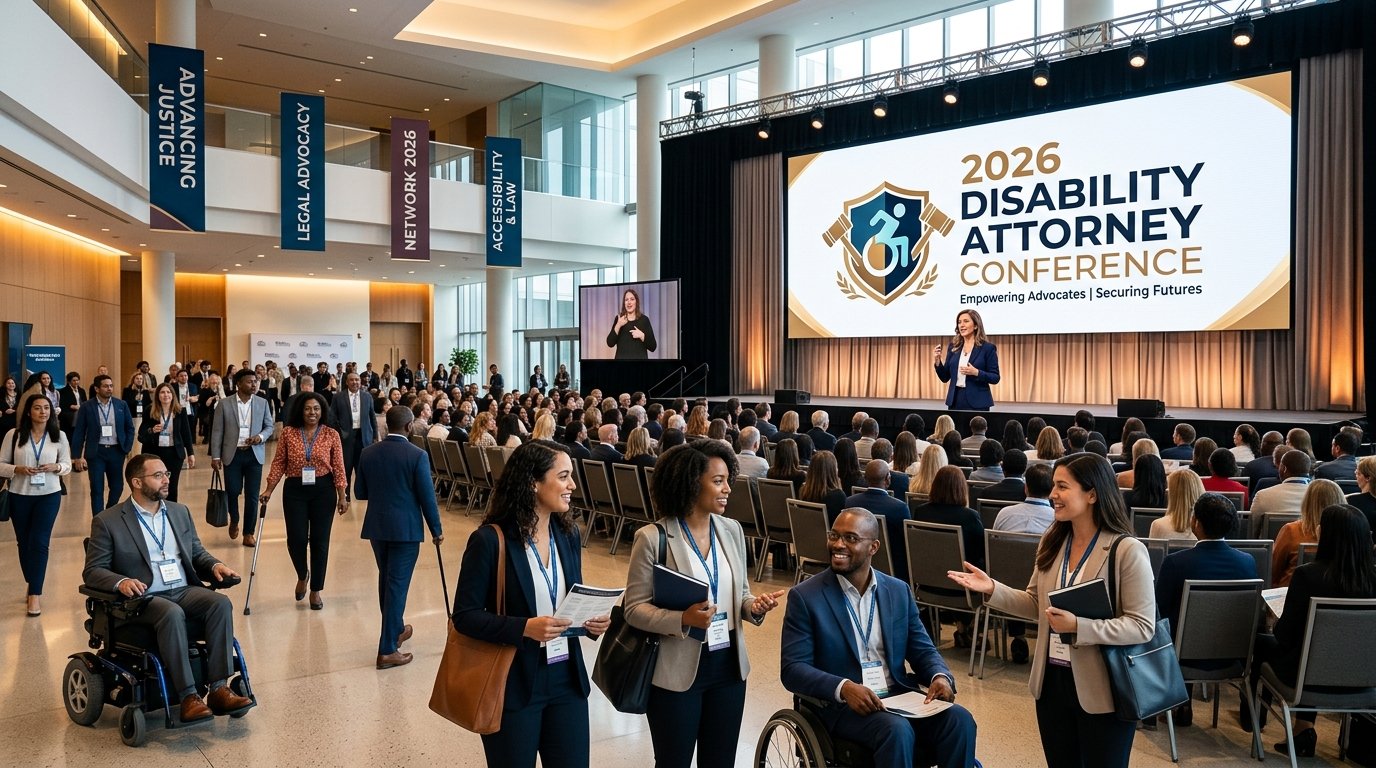
- Why Attend Disability Law Conferences in 2026?
- Top Disability Attorney Conferences in 2026
- Conference Comparison: Which Event Is Right for You?
- How to Maximize Your Conference Experience
- CLE Credits and Compliance Requirements by State
- Early Bird Registration and Cost-Saving Tips
- 2026 Conference Trends and Hot Topics
- Virtual vs. In-Person: Conference Formats for 2026
- Frequently Asked Questions
Introduction
The landscape of disability law continues to evolve at a rapid pace, with new Social Security Administration regulations, emerging telehealth evidence standards, and artificial intelligence reshaping case management practices. For disability attorneys committed to delivering exceptional client outcomes in 2026, professional development isn’t optional—it’s essential.
Whether you practice Social Security Disability Insurance (SSDI), veterans’ disability benefits, long-term disability insurance claims, or workers’ compensation, the right conference can transform your practice. This comprehensive guide identifies the top disability attorney conferences scheduled for 2026, helping you select events that align with your practice goals, CLE requirements, and professional development objectives.
From the prestigious NOSSCR Annual Conference to specialized regional seminars, we’ve compiled everything you need to plan your 2026 conference calendar strategically. You’ll discover which events offer the most valuable networking opportunities, how to maximize your return on investment, and what cutting-edge topics will dominate disability law discussions in the year ahead.
Why Attend Disability Law Conferences in 2026?
Investing time and resources in disability law conferences delivers measurable returns that extend far beyond a few days away from the office. Here’s why 2026 conference attendance should be a strategic priority for your practice.
CLE Credit Opportunities
Most states require disability attorneys to complete 12-15 continuing legal education credits annually, with many requiring specific ethics hours. Disability law conferences offer an efficient pathway to fulfill these requirements while focusing exclusively on your practice area.
Unlike generic legal education seminars, disability-focused conferences deliver credits through sessions directly applicable to your daily practice. You’ll learn about recent Administrative Law Judge (ALJ) decision patterns, updated SSA rulings, and veterans’ benefits policy changes—all while satisfying bar requirements.
Major conferences like NOSSCR and NADR events typically offer 12-20 CLE credits over 2-3 days, often including 2-4 ethics credits. This concentration allows you to complete a substantial portion of your annual requirement in a single event, eliminating the need to patch together credits from various sources throughout the year.
Networking with Industry Leaders
The disability law community is uniquely collegial, and conferences serve as the primary gathering point for this nationwide network. You’ll connect with:
- Fellow practitioners who handle similar cases and can become valuable referral partners
- Expert witnesses including vocational experts and medical professionals who testify regularly
- Technology vendors offering case management software and evidence gathering tools
- Advocacy organization leaders from the National Organization of Social Security Claimants’ Representatives and similar groups
- Former SSA officials and ALJs who provide insider perspectives on claim adjudication
These relationships often generate referrals for cases outside your geographic area, collaborative opportunities on complex claims, and mentorship connections that accelerate professional growth. Many successful disability practices trace their most productive partnerships to conference networking events.
Staying Current with Regulatory Changes
The Social Security Administration, Department of Veterans Affairs, and insurance carriers continuously modify their policies, procedures, and interpretation standards. Conference presentations from SSA officials, appeals council members, and policy experts ensure you’re implementing the most current strategies.
In 2026, expect substantial focus on:
- Implementation of SSA’s occupational information system replacement for the Dictionary of Occupational Titles
- Evolving standards for telehealth medical evidence evaluation
- Updated mental health impairment listing criteria
- Changes to veteran disability rating schedules
- AI-assisted initial determination processes at the state DDS level
Learning these changes through conference presentations—often directly from the officials implementing them—provides clarity that written guidance alone cannot match. You’ll leave with actionable insights you can implement immediately in pending cases.
Top Disability Attorney Conferences in 2026
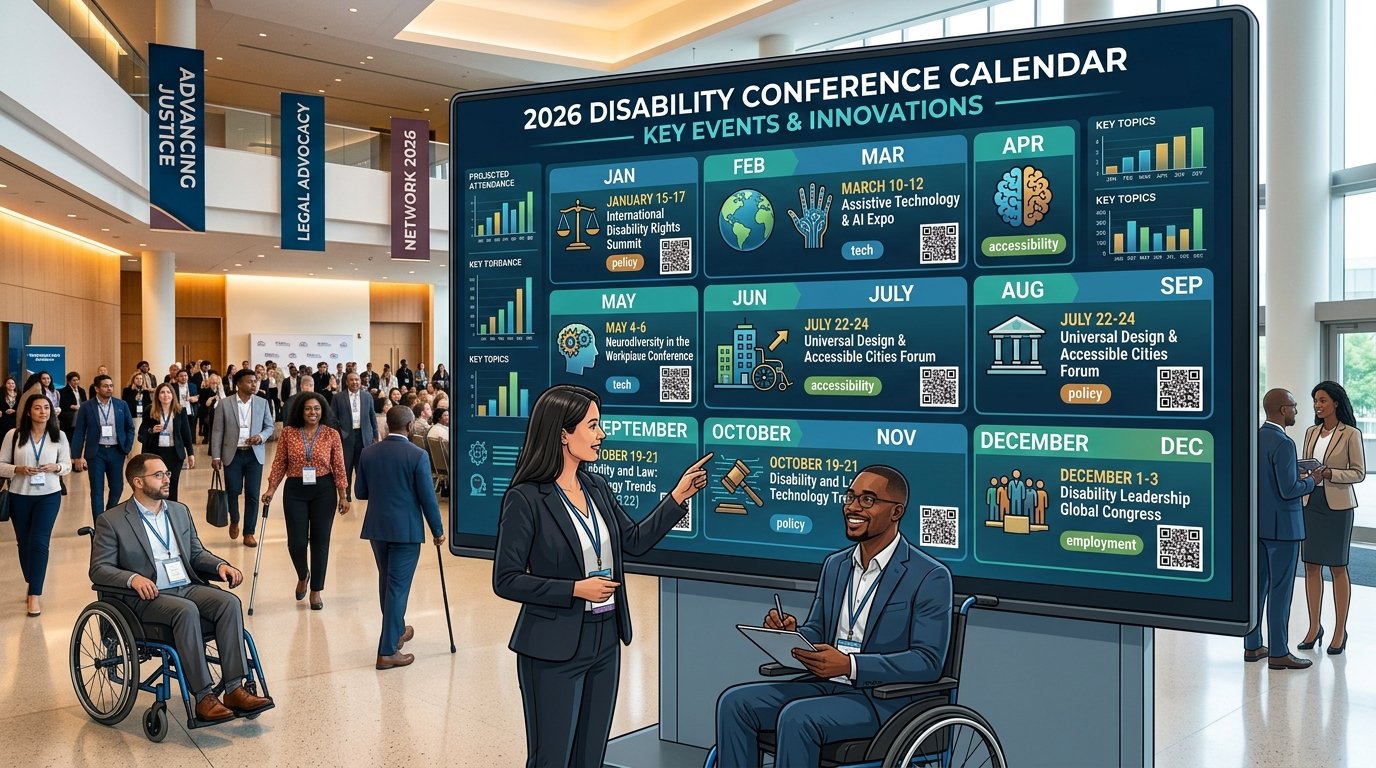
Plan your 2026 professional development calendar around these premier disability law conferences. Each offers unique value depending on your practice focus and experience level.
NOSSCR Annual Conference
Expected Dates: September/October 2026 (specific dates TBA)
Location: To be announced (rotates among major U.S. cities)
Estimated Cost: $700-$900 (members); $1,100-$1,300 (non-members)
The National Organization of Social Security Claimants’ Representatives Annual Conference remains the flagship event for Social Security disability attorneys. With typically 1,000+ attendees, this multi-day conference offers the most comprehensive education program in the field.
What to Expect:
- 15-20 CLE credits including ethics sessions
- 50+ educational sessions across multiple tracks (beginner, intermediate, advanced)
- Extensive exhibit hall featuring legal technology vendors
- Networking receptions and special interest group meetings
- Pre-conference workshops on specialized topics
- Awards ceremony recognizing excellence in disability advocacy
Best For: SSDI and SSI practitioners of all experience levels seeking comprehensive education and maximum networking opportunities.
Registration Strategy: NOSSCR members receive significant discounts; membership pays for itself with a single conference registration. Early bird rates typically offer $150-$200 savings.
NADR National Disability Rights Conference
Expected Dates: Spring 2026 (March/April – specific dates TBA)
Location: To be announced
Estimated Cost: $500-$700
The National Association of Disability Representatives conference attracts both attorneys and non-attorney representatives, creating a broader professional development environment with practical, frontline-focused education.
What to Expect:
- 10-12 CLE credits
- Sessions on hearing preparation and evidence development
- Medical-legal expert panels
- Technology and practice management tracks
- Certification exam preparation for newer representatives
Best For: Practitioners seeking practical, immediately applicable hearing strategies and those who work with non-attorney representatives in their practices.
American Bar Association – Disability Law Summit
Expected Dates: Summer 2026 (June/July – specific dates TBA)
Location: Major metropolitan area (rotates)
Estimated Cost: $600-$800 (ABA members); $900-$1,100 (non-members)
The ABA’s disability law programming covers a broader spectrum than Social Security-focused conferences, including employment discrimination under the ADA, education rights under IDEA, and disability civil rights litigation.
What to Expect:
- 8-12 CLE credits
- Sessions on ADA employment compliance
- Special education law updates
- Disability civil rights litigation strategies
- Intersection of disability law and elder law
- Published materials and resource guides
Best For: Attorneys with diverse disability-related practices extending beyond Social Security claims, or those seeking to expand into ADA employment or education law.
Social Security Disability Practice Seminar
Expected Dates: Multiple regional dates throughout 2026
Location: Various cities (Chicago, Atlanta, Los Angeles, Dallas typically included)
Estimated Cost: $300-$500 per seminar
These intensive one or two-day regional seminars provide focused, practical training on specific aspects of Social Security disability practice. Multiple sessions throughout the year allow flexible scheduling.
What to Expect:
- 6-8 CLE credits per session
- Deep-dive topics like mental health claims, listing-level impairments, or Appeals Council strategy
- Smaller group sizes enabling direct speaker interaction
- Regional networking opportunities
- Lower cost alternative to national conferences
Best For: Attorneys seeking focused skill development in specific claim types or hearing strategies without the time and cost commitment of multi-day national events.
Veterans Disability Benefits Conference
Expected Dates: Fall 2026 (September/October – specific dates TBA)
Location: Washington D.C. area (proximity to VA headquarters)
Estimated Cost: $500-$700
Specialized programming for attorneys representing veterans in VA disability benefit claims, appeals to the Board of Veterans’ Appeals, and Court of Appeals for Veterans Claims litigation.
What to Expect:
- 8-12 CLE credits
- Updates on VA rating schedule changes
- Nexus letter and medical evidence strategies
- Appeals Modernization Act implementation updates
- Veterans law judge decision analysis
- Connection to veteran service organization representatives
Best For: Attorneys with established or developing veterans’ disability practices, and Social Security disability attorneys seeking to expand into veterans’ benefits representation.
Conference Comparison: Which Event Is Right for You?
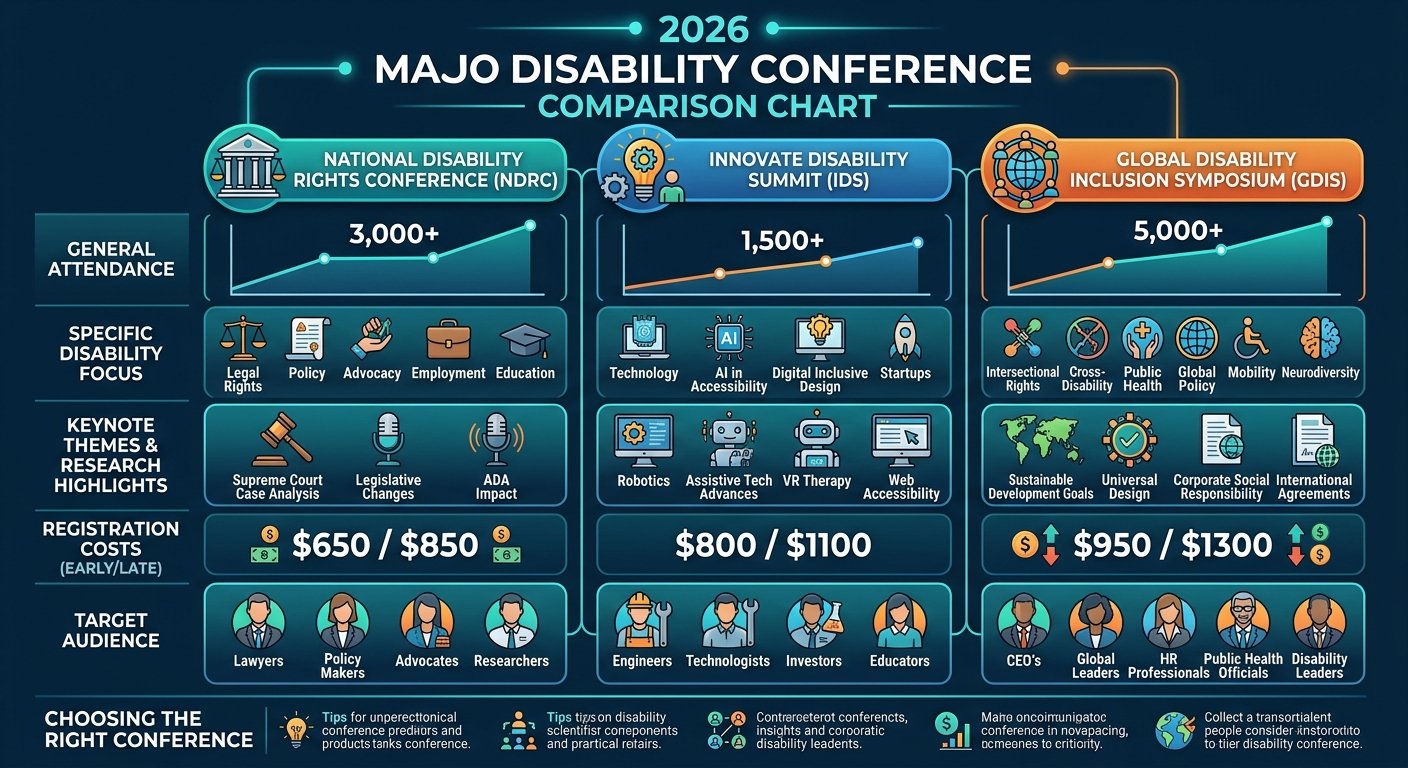
With multiple conference options competing for your time and budget, strategic selection ensures maximum return on your professional development investment.
By Practice Area Focus
Primarily Social Security Disability (SSDI/SSI):
Priority ranking:
- NOSSCR Annual Conference (most comprehensive)
- Social Security Disability Practice Seminar (skill-specific development)
- NADR National Conference (practical hearing strategies)
Veterans’ Disability Benefits:
Priority ranking:
- Veterans Disability Benefits Conference (specialized focus)
- NOSSCR Annual Conference (often includes VA tracks)
- Regional veterans’ law CLEs
Long-Term Disability Insurance:
Priority ranking:
- ABA Disability Law Summit (includes ERISA coverage)
- Specialized insurance bad faith conferences
- NOSSCR (limited but growing LTD content)
Multiple Practice Areas:
Priority ranking:
- ABA Disability Law Summit (broadest coverage)
- NOSSCR Annual Conference (largest networking base)
- Regional seminars to supplement gaps
By Geographic Location
Minimizing Travel Costs:
If budget constraints limit travel, prioritize conferences scheduled within driving distance or in cities with low-cost flight connections from your home base. Regional Social Security Disability Practice Seminars specifically target this need, offering quality education without cross-country travel expenses.
Strategy: Attend one major national conference (NOSSCR or NADR) every 2-3 years for networking and comprehensive updates, supplementing with regional seminars annually for continued education at lower cost.
Maximizing Networking Value:
For building national referral networks, geographic diversity matters less than attendee quality and quantity. NOSSCR’s 1,000+ attendees from all 50 states create unmatched networking density. If developing referral relationships is your primary objective, travel investment to major conferences pays dividends through cases referred from attorneys in other jurisdictions.
By Experience Level
New to Disability Law (0-3 years):
Focus on conferences offering designated beginner tracks with fundamentals programming:
- NOSSCR Annual Conference (extensive beginner track)
- NADR Conference (practical, frontline-focused)
- Regional one-day seminars (concentrated skill-building)
Look for sessions covering initial interview techniques, evidence gathering, medical record analysis, and basic hearing preparation. Networking with experienced practitioners willing to mentor newcomers is equally valuable as formal programming.
Intermediate Practitioners (3-10 years):
Seek advanced strategy sessions and specialized topic programming:
- NOSSCR Annual Conference (intermediate/advanced tracks)
- Topic-specific regional seminars (mental health claims, appeals council, etc.)
- ABA programming (if expanding practice areas)
At this career stage, focus on elevating win rates in complex cases, reducing time-to-decision, and developing expertise in profitable niche areas within disability law.
Experienced Practitioners (10+ years):
Prioritize cutting-edge developments, policy discussions, and leadership opportunities:
- NOSSCR Annual Conference (policy sessions, committee participation)
- Specialized advanced strategy seminars
- Speaking opportunities to build thought leadership
Consider shifting from pure consumption of CLE content to contributing through speaking, writing, and mentoring newer attorneys you meet at conferences.
How to Maximize Your Conference Experience
Simply attending a conference delivers minimal value. Strategic preparation and intentional follow-through transform registration fees into practice-changing investments.
Pre-Conference Preparation Checklist
6-8 Weeks Before:
- Review full conference agenda and identify must-attend sessions
- Research speakers and prepare specific questions for presenters you want to approach
- Set measurable networking goals (e.g., “connect with 15 attorneys from different states”)
- Book accommodations at the conference hotel (hallway and elevator networking is valuable)
- Arrange coverage for your practice during your absence
- Order new business cards if current supply is low
2-4 Weeks Before:
- Download conference mobile app and create personalized schedule
- Join conference-specific social media groups or hashtags
- Research attendee lists if available and identify specific people to connect with
- Prepare your 30-second practice introduction for networking situations
- Submit questions for any Q&A sessions you plan to attend
- Review recent SSA or VA policy updates so you can engage intelligently in discussions
Week of Conference:
- Pack professional attire appropriate for both sessions and networking events
- Bring portable charger, notepad/tablet, and comfortable shoes
- Load your calendar with specific session times and locations
- Set up business card scanning app on your phone
- Print or download any pre-conference materials speakers have distributed
Networking Strategies for Disability Attorneys
During Sessions:
Arrive 5-10 minutes early and introduce yourself to people sitting nearby. Ask what they’re hoping to learn from the session. These pre-session conversations often lead to deeper connections than rushed hallway encounters.
Take notes not just on content, but on speakers and attendees who share insights relevant to your practice. Mark who you want to follow up with and why.
At Receptions and Social Events:
Avoid the common mistake of spending the entire evening with people from your own firm or state. Set a personal rule: talk to at least three attorneys you’ve never met before dedicating time to existing contacts.
When exchanging business cards, jot a quick note on the back about what you discussed. This memory aid becomes invaluable when following up weeks later.
Conversation Starters That Work:
- “What’s the most interesting case you’re working on right now?”
- “Have you noticed any patterns in ALJ decisions in your region?”
- “What technology are you using for medical record organization?”
- “Are you seeing any changes in how DDS handles [specific impairment type]?”
Avoid immediately asking for referrals. Focus on building genuine professional relationships first.
Strategic Table Selection:
At meals, sit with strangers rather than colleagues. Some conferences assign seating specifically to encourage cross-pollination. If seating is open, look for tables with attorneys from different states or practice focuses.
Post-Conference Implementation Plan
Within 48 Hours:
- Send connection requests on LinkedIn to everyone you met
- Email personalized follow-ups to the 3-5 most valuable new contacts
- Scan or photograph any business cards and add to your CRM
- Review notes and identify the top 3 actionable items to implement in your practice
in 2 Weeks:
- Organize and file all conference materials by topic
- Create implementation timeline for new strategies learned
- Share key takeaways with your staff in a team meeting
- Submit CLE credit certificates to your state bar
Within 30 Days:
- Implement at least one new practice procedure learned at the conference
- Write a blog post or social media content about key insights (positions you as thought leader)
- Send articles or resources to new contacts that relate to discussions you had
- Calendar registration dates for next year’s conferences
Ongoing:
- Stay connected with new contacts through occasional emails about relevant developments
- Share case referrals when appropriate
- Engage with conference connections’ social media content
- Consider co-authoring articles or presenting jointly at future conferences
CLE Credits and Compliance Requirements by State
Understanding continuing legal education requirements ensures conference attendance fulfills your compliance obligations efficiently.
Understanding CLE Requirements for Disability Attorneys
While all states except Maryland require some form of continuing legal education, specific requirements vary significantly. Most states require 12-15 hours annually or 24-30 hours in a two-year reporting period.
Key Variables by State:
Ethics Credits: Most states require 1-4 hours of professional responsibility or legal ethics annually. Many disability law conferences include ethics sessions, but confirm before assuming the conference satisfies this requirement.
Live vs. Self-Study: Some states cap the number of credits that can be earned through online or recorded formats (typically 50% of annual requirements). If attending virtual conferences, verify your state accepts these credits without limitation.
Carry-Over Credits: Many states allow excess credits to carry forward to the next reporting period, though usually with caps (often 50% of annual requirement). Strategic conference timing can help you bank credits before busy case periods.
Subject Matter Restrictions: A few states require a portion of credits in specific areas. For instance, California attorneys must complete 4 hours related to elimination of bias, and some states require legal technology credits.
[INSERT IMAGE 3: CLE map – disability-attorney-cle-requirements-by-state.jpg]
State-Specific Considerations for Common Disability Practice Jurisdictions:
- California: 25 hours per 3-year cycle including 4 hours legal ethics and 1 hour in elimination of bias
- New York: 24 hours biannially including 4 hours ethics and professionalism
- Texas: 15 hours annually including 3 hours ethics
- Florida: 33 hours every 3 years including 5 hours ethics, 2 hours bias elimination, 3 hours technology
- Pennsylvania: 12 hours annually including 2 hours ethics
How to Track and Report Conference Credits
Certificate Collection:
Most conferences provide CLE certificates either at the event or via email within 1-2 weeks. Some states require original certificates while others accept photocopies. Create a dedicated folder (physical or digital) for all CLE certificates.
Don’t rely on conference organizers to report your attendance to your state bar. While some organizations do this, technical errors occur. Always verify credits appear in your state bar account.
Documentation Requirements:
Beyond certificates, maintain:
- Conference agenda showing approved credit hours by session
- Proof of attendance (registration receipt, name badge)
- Session sign-in sheets if required by your state
- Notes from sessions (some states audit and require proof of actual attendance)
Credit Calculation for Multi-Session Conferences:
You receive credit only for sessions actually attended, not all sessions offered. If the conference schedule has concurrent sessions and you choose one track, you earn credits only for that track.
Most states calculate credit as one hour per 60 minutes of instruction, though some use 50-minute hours. Verify your state’s calculation method. Lunch sessions usually don’t qualify unless featuring an approved educational program.
Managing Multi-State Licensure:
If you’re licensed in multiple states, you must satisfy each state’s individual requirements. Fortunately, most states accept CLE programs approved by other states, though some (like California) require pre-approval.
Strategy: Choose conferences approved for the most restrictive state where you’re licensed. This usually ensures acceptance in other jurisdictions.
Early Bird Registration and Cost-Saving Tips
Conference attendance represents a significant investment. Strategic planning reduces costs while preserving educational value.
Group Registration Discounts
Most major disability law conferences offer reduced rates when multiple attorneys from the same firm register together. Typical savings range from $50-$150 per person for groups of 3 or more.
Maximizing Group Benefits:
Even small practices can access group rates by coordinating with other local disability attorneys. Approach this as: “We’re planning to attend NOSSCR—want to register as a group to save on fees?”
This strategy delivers dual benefits: cost savings plus strengthened local professional relationships. Consider forming an informal “conference group” with 3-4 compatible firms in your area who commit to group registration annually.
Staff Member Inclusion:
Some conferences welcome paralegals and office administrators at reduced rates. If your practice includes non-attorney staff who handle significant case development, their conference attendance can deliver substantial ROI through improved procedures and direct access to exhibit hall vendors.
Association Member Benefits
NOSSCR membership ($325 annually for attorneys) provides $200-$400 conference registration discounts, meaning membership pays for itself with a single conference. Additional benefits include:
- Members-only listserv access for case consultations
- Quarterly journal with case law updates
- Advocacy resources and amicus brief participation
- Regional chapter networking
NADR membership ($195 annually) similarly offers registration discounts plus certification programs and resource libraries.
Cost-Benefit Analysis:
If you attend even one major conference annually, association membership delivers positive ROI purely through registration savings, with all other benefits as bonus value.
Travel and Accommodation Planning
Hotel Strategy:
Conference hotels typically offer discounted room blocks, but these rates aren’t always the lowest available. Compare conference hotel rates against nearby hotels using booking sites.
However, staying at the conference hotel delivers networking value worth a modest price premium. Breakfast encounters, elevator conversations, and lobby gatherings with other attendees generate connections impossible from an off-site hotel.
Flight Cost Management:
Book flights 6-8 weeks in advance for optimal pricing. Use flight comparison tools and be flexible with airports if the conference city has multiple options (e.g., Midway vs. O’Hare for Chicago conferences).
Join hotel and airline loyalty programs even if you travel infrequently. Points from one or two annual conferences can fund a future personal trip.
Meal Cost Control:
Conference ticket prices rarely include all meals. Budget $50-$100 per day for meals not covered. Some strategies:
- Book hotels with free breakfast
- Bring snacks for between-session energy
- Explore restaurants away from the conference venue (tourist-area restaurants charge premium prices)
- Network over coffee rather than expensive dinners
Tax Deduction Optimization:
Conference expenses—registration, travel, accommodation, meals (usually 50%)—are typically tax-deductible as business education expenses. Maintain organized records:
- Separate conference expenses from personal spending
- Keep receipts for all costs
- Document business purpose
- If combining conference travel with personal vacation, carefully allocate costs to deductible vs. personal portions
Consult your tax advisor about specific deductibility rules, but properly documented conference attendance usually qualifies as deductible professional development.
2026 Conference Trends and Hot Topics
Forward-looking disability attorneys attend conferences not just for current practice improvements, but to position themselves for emerging trends that will shape the field.
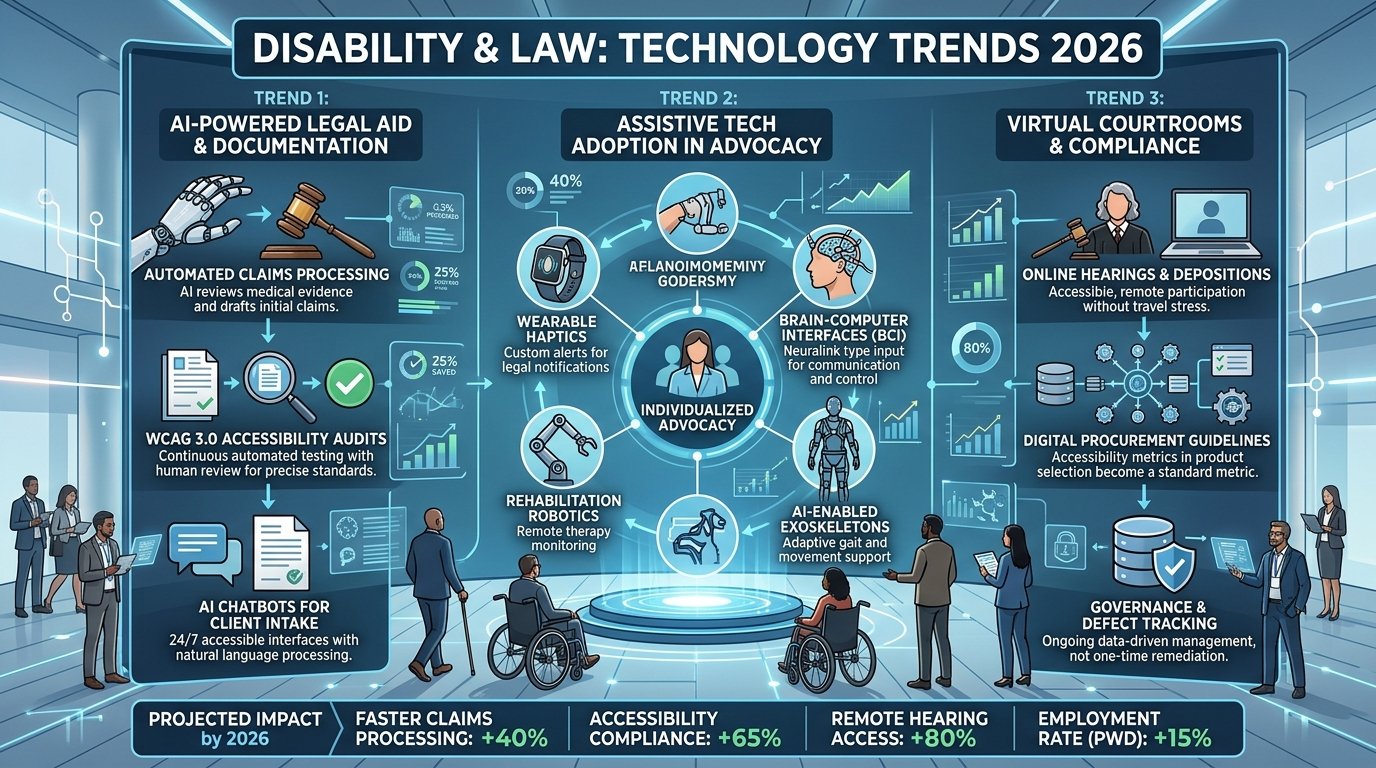
AI and Legal Technology in Disability Practice
Artificial intelligence has moved from futuristic speculation to present-day reality in disability law practice. Expect 2026 conferences to feature extensive programming on:
AI-Assisted Medical Record Analysis:
New technology platforms use natural language processing to identify relevant medical evidence in lengthy records, flagging potential listing-level findings and creating automated chronologies. Conference sessions will demonstrate these tools and address ethical considerations around AI-assisted representation.
Predictive Analytics for Case Outcomes:
Some software now analyzes case characteristics against historical data to predict approval likelihood and optimal hearing strategies. While controversial, these tools are gaining adoption and will feature prominently in technology-focused sessions.
Automated Claim Form Population:
Document assembly technology that auto-populates SSA forms using client interview responses and medical records reduces administrative time. Demonstrations of these systems will show efficiency gains that allow practitioners to handle larger caseloads without quality compromise.
Ethical Boundaries:
Multiple sessions will address when AI assistance crosses into unauthorized practice or inadequate representation. Bar associations are developing guidelines, and conferences provide forums for these evolving standards.
Telehealth Evidence in Disability Claims
The pandemic-accelerated shift to telehealth created new evidence challenges and opportunities in disability adjudication. 2026 conferences will explore:
Telehealth Treatment Record Evaluation:
How do ALJs and DDS examiners weigh telehealth visits against in-person examinations? What documentation standards overcome skepticism about remote assessment of physical limitations?
Virtual Consultative Examinations:
The SSA is exploring virtual CEs for certain impairments. Conference sessions will prepare attorneys for these examinations and address how to challenge inadequate virtual assessments.
Technology Access as a Disability Factor:
When claimants cannot access telehealth due to cognitive impairments, technology limitations, or other disability-related factors, this itself may constitute evidence of functional limitations. Emerging case law will be analyzed.
Remote Work and RFC Assessment:
The growth of work-from-home positions challenges traditional residual functional capacity arguments. Sessions will address how to argue that even sedentary remote work exceeds your client’s capabilities when they cannot maintain focus, follow multi-step instructions, or meet productivity standards.
Recent SSA Policy Updates
Several major Social Security Administration initiatives will drive conference content in 2026:
Occupational Information System (OIS) Implementation:
The SSA’s replacement for the outdated Dictionary of Occupational Titles will be in active implementation phases. Conference sessions will provide critical training on:
- How job data in the new system differs from DOT
- Arguments addressing OIS limitations and inaccuracies
- Cross-examination strategies for vocational experts using OIS
- Regional variations in OIS application by ALJs
Compassionate Allowances Expansion:
The SSA periodically adds conditions to expedited decision processes. Updates on new qualifying conditions and how to identify and flag these cases will feature in multiple sessions.
Appeals Council Remand Patterns:
Analysis of what arguments and evidence types are driving Appeals Council remands provides strategic insights. Data-driven sessions will identify the most effective appeal strategies based on recent outcomes.
Presumptive Disability Pilot Programs:
Any pilots allowing benefits pending full adjudication will be examined, with practical guidance on identifying qualifying clients.
Virtual vs. In-Person: Conference Formats for 2026
The pandemic permanently altered conference delivery formats. Understanding the advantages and limitations of each helps you select the right format for your learning style and circumstances.
Hybrid Conference Options
Most major 2026 disability law conferences will offer hybrid attendance, allowing choice between in-person and virtual participation.
Typical Hybrid Conference Features:
- Live-streamed general sessions viewable remotely
- Virtual attendee access to recorded sessions for 30-90 days post-conference
- Digital exhibit halls where virtual attendees can “visit” vendor booths
- Dedicated virtual networking rooms organized by topic or region
- Hybrid sessions where in-person and remote attendees can interact via chat
- Separate pricing tiers (virtual typically 40-60% lower than in-person)
When Hybrid Makes Sense:
Choose hybrid attendance when:
- Travel costs exceed your professional development budget
- You cannot leave your practice for multiple days
- Family or health circumstances prevent travel
- You want to “preview” a conference before committing to full in-person attendance in future years
- The conference offers substantial recorded content you can consume on your own schedule
Hybrid Limitations:
Virtual attendance sacrifices:
- Spontaneous networking in hallways, at meals, and in social settings
- Ability to approach speakers immediately after sessions with questions
- Exhibit hall product demonstrations and face-to-face vendor discussions
- The immersive “away from office” focus that in-person attendance creates
- Social connections that develop naturally through shared experience
Pros and Cons of Virtual Attendance
Virtual Conference Advantages:
Cost Efficiency: Eliminating travel, accommodation, and meal expenses makes virtual attendance 60-70% less expensive than in-person participation. For solo practitioners and small firms with tight budgets, this difference determines whether conference attendance is financially viable.
Schedule Flexibility: Recorded sessions allow you to consume content on your schedule, pausing to handle urgent client matters and returning later. If a session disappoints, you can switch to another without the awkwardness of walking out of a live presentation.
Comprehensive Content Access: Virtual attendance often includes access to ALL conference sessions (recorded), whereas in-person attendees must choose one session when multiple occur simultaneously. You can view your chosen track live, then watch other tracks at your convenience.
Reduced Time Away: Virtual attendance requires no travel days. You can participate in morning sessions, handle afternoon client meetings, and resume evening programming—impossible with cross-country travel.
Review and Implementation: Recording access allows you to re-watch complex sessions when implementing new strategies, capturing details you might miss in a single live viewing.
Virtual Conference Disadvantages:
Home Office Distractions: Even well-intentioned virtual attendees get pulled into client emergencies, staff questions, and household interruptions. The learning environment lacks the focused immersion of physical conference attendance.
Networking Limitations: While virtual “networking rooms” exist, they feel forced and transactional compared to organic in-person connections. The valuable random encounters—sitting next to someone at lunch who becomes a referral partner—don’t happen virtually.
Technology Frustrations: Platform glitches, connectivity issues, and user interface problems create friction absent from in-person attendance. When sessions are live-streamed, technical failures mean missing content entirely.
Frequently Asked Questions About Disability Attorney Conferences in 2026
When should I register for 2026 disability attorney conferences?
Early bird registration typically opens 6-9 months before the conference date. Most disability law conferences offer the deepest discounts when you register 4-6 months in advance. For major conferences like the NOSSCR Annual Conference, registration often opens in January for fall events. Sign up for conference mailing lists in early 2025 to receive registration notifications and exclusive early-access codes.
The sweet spot for registration is usually 4-5 months before the event—after early-bird pricing begins but before hotel room blocks fill. Waiting until the last minute often means paying $150-$300 more and staying at hotels far from the conference venue.
Do virtual disability law conferences offer CLE credits?
Yes, most accredited virtual disability law conferences offer CLE credits equivalent to in-person attendance. However, some states have limits on virtual CLE hours per reporting period (typically 50% of annual requirements). Check your state bar requirements before registering for virtual-only conferences.
Hybrid attendance options often provide the most flexibility for credit compliance. Even if you attend virtually, many states require proof of actual participation—typically through timed quizzes or monitored viewing—rather than simply registering and receiving automatic credit.
New York, California, and Texas have specific virtual CLE requirements, so verify your state’s rules if licensed in these jurisdictions.
How much do disability attorney conferences typically cost?
Registration fees vary significantly based on conference size and format:
- Regional one-day seminars: $150-$400
- Multi-day national conferences: $600-$1,200 for full registration
- Virtual-only attendance: 40-60% less than in-person
- Association member discounts: Typically $100-$300 off standard rates
Budget an additional $500-$1,500 for travel, accommodation, and meals for multi-day events. Many firms cover these expenses as professional development investments, treating conference attendance as essential business overhead rather than discretionary spending.
The true cost calculation should factor in opportunity cost (billable time lost) against the value gained through education, efficiency improvements, and new client referrals generated through networking.
Can new disability attorneys benefit from these conferences?
Absolutely. Most disability law conferences offer beginner tracks or “fundamentals” sessions specifically designed for attorneys new to Social Security disability, veterans’ benefits, or long-term disability practice.
These sessions cover essential topics like:
- Disability claim filing procedures and deadlines
- Medical evidence gathering and records analysis
- How to prepare clients for consultative examinations
- Basic hearing preparation and opening statement structure
- Evidence submission timing and formats
- Common ALJ questioning patterns
Beyond educational content, networking opportunities are invaluable for new practitioners seeking mentorship and referral relationships. Experienced disability attorneys often become mentors to newer practitioners they meet at conferences, offering case consultations and guidance through complex claims.
If you’re new to disability law, attend at least one major conference in your first year of practice. The foundational knowledge and connections you gain will accelerate your professional development significantly.
What should I bring to a disability attorney conference?
Pack these essentials for maximum conference value:
Business Materials:
- Business cards (100+ for multi-day events—you’ll use more than expected)
- Digital business card app as backup (LinkedIn QR code, contactless sharing apps)
- Your firm’s information on a tablet for easy display when discussing your practice
Technology:
- Smartphone with conference app downloaded
- Portable battery charger (essential for full-day use)
- Tablet or laptop if you prefer digital note-taking
- Headphones for virtual sessions if hybrid attendance
Documentation:
- Bar number for CLE credit tracking
- Notepad or digital note-taking device
- Folder for collecting handouts and materials
Professional Comfort:
- Business professional attire for sessions (conference dress codes vary; check guidelines)
- Business casual for evening networking events
- Extremely comfortable walking shoes (conference venues require extensive walking)
- Light jacket (conference room temperatures vary wildly)
Preparation Materials:
- List of specific questions for presenters you want to approach
- Names of people you hope to connect with if attendee lists are published
- Your prepared 30-second practice introduction
Avoid bringing: Bulky briefcases, excessive handouts to distribute (digital sharing is preferred), or your laptop if you won’t actually use it (it becomes a burden to carry).
Are disability law conferences tax-deductible?
Yes, in most cases. Conference expenses directly related to maintaining or improving professional skills required in your current practice are typically tax-deductible business expenses for practicing attorneys.
Generally Deductible Expenses:
- Conference registration fees
- Transportation to/from the conference (flights, mileage, parking, rideshares)
- Hotel accommodation during the conference
- 50% of meal costs (standard IRS limitation for business meals)
- Tips related to conference travel
- Baggage fees and similar travel expenses
Documentation Requirements:
Keep organized records including:
- Registration receipt showing conference name, dates, and educational purpose
- Flight and hotel receipts
- Ground transportation receipts
- Meal receipts (even though only 50% deductible, keep full documentation)
- Conference agenda demonstrating business purpose
Special Situations:
If you extend your trip for personal vacation before or after the conference, carefully allocate costs. Transportation may be fully deductible if the primary purpose was business, but you can only deduct hotel and meals for business days.
If a family member accompanies you, only your individual costs are deductible unless the family member is a bona fide business employee with legitimate business purpose for attending.
Recommendation: Consult your tax advisor about specific deductibility rules for your situation, but properly documented conference attendance for practice-relevant education almost always qualifies as a deductible business expense.
How do I choose between multiple conferences in 2026?
Prioritize based on these factors in order:
1. Practice Area Alignment (Highest Priority)
Attend conferences focused on your actual caseload. If 80% of your practice is Social Security disability, NOSSCR delivers more value than a broad ABA disability law summit covering employment discrimination and education law you don’t practice.
2. CLE Credit Needs
Check which conferences offer credits in areas where you have deficits. If you need ethics credits or your state has specialized requirements (technology, bias elimination), verify the conference provides these specific credits.
3. Speaker Quality and Topics
Review the faculty list and session descriptions. Conferences featuring SSA officials, appeals council members, or recognized experts in your practice area deliver more actionable insights than generic presentations.
4. Networking Opportunity Value
Larger national conferences (1,000+ attendees) provide broader networking reach but can feel overwhelming. Regional seminars (50-200 attendees) allow deeper connections but with fewer total contacts. Match conference size to your networking objectives.
5. Budget Constraints
Compare total cost (registration + travel + lost billable time) against expected value. One comprehensive national conference may deliver better ROI than three regional seminars, or vice versa depending on your specific goals.
6. Schedule Compatibility
Conference timing matters. Avoid dates that conflict with filing deadlines, major hearings, or personal commitments. Fall conferences often work better than spring dates that conflict with tax season or children’s school schedules.
If genuinely unable to choose between two conferences, consider attending one in-person and the other virtually to maximize content access while managing costs.
Will 2026 conferences address AI and legal technology?
Yes, expect significant coverage of artificial intelligence, case management software, telehealth medical evidence, and digital hearing procedures. Most major 2026 disability law conferences will feature dedicated technology tracks covering:
AI Applications:
- Medical record analysis and summarization tools
- Predictive analytics for case outcome forecasting
- Automated brief and correspondence generation
- AI-assisted legal research for disability case law
Practice Management Technology:
- Cloud-based case management systems specific to disability law
- Client communication platforms and portals
- Automated deadline tracking and calendar management
- Integration between practice management and time-tracking/billing systems
Evidence Technology:
- Telehealth record analysis and presentation
- Digital medical record organization systems
- Video evidence presentation for hearings
- Electronic submission to SSA and VA systems
Emerging Trends:
- The SSA’s ongoing digitization initiatives and online hearing platforms
- Cybersecurity and client data protection
- Ethical boundaries of AI-assisted representation
- Technology access barriers as evidence of disability
The SSA is actively implementing technology changes to its adjudication system, making these sessions among the most practically valuable conference content for staying current with procedural requirements.
Can I get CLE ethics credits at disability law conferences?
Many disability attorney conferences include ethics-focused sessions that qualify for mandatory professional responsibility credits. Topics typically include:
Common Ethics Sessions:
- Fee agreements and contingency fee compliance in disability cases
- Client trust account management for Social Security backpay
- Conflicts of interest in disability practice (representing multiple family members, former consultative examiners, etc.)
- Ethical use of AI tools and technology in client representation
- Attorney advertising and solicitation rules specific to disability practice
- Handling client funds when representative payee issues arise
- Withdrawal from representation in disability cases
- Ethical obligations when clients request fraudulent medical evidence
Check specific conference agendas for sessions explicitly labeled as ethics or professional responsibility credits, as these are often limited to 2-4 hours per event.
Some states require that ethics CLE be taught by approved ethics instructors or cover specific approved topics, so verify that the conference’s ethics sessions meet your state’s particular requirements beyond just being labeled “ethics.”
Most major conferences prominently identify which sessions qualify for ethics credit, as they understand this is a critical selection factor for registrants.
How far in advance are 2026 conference schedules announced?
Major recurring conferences typically announce dates and venues 12-18 months in advance, with detailed agendas and speaker lineups released 4-6 months before the event.
Typical Announcement Timeline:
12-18 Months Prior:
- Conference dates and host city announcement
- Hotel room block information
- General theme or focus areas
6-9 Months Prior:
- Early bird registration opens
- Initial faculty announcements
- Preliminary session topics
3-4 Months Prior:
- Complete agenda with session titles and descriptions
- Full speaker lineup with biographies
- Detailed schedule with concurrent session times
1-2 Months Prior:
- Final agenda adjustments
- Mobile app release
- Networking event details
NOSSCR usually announces its annual conference location by January of the preceding year. For example, the Fall 2026 NOSSCR conference location and dates will likely be announced by January 2025, with registration opening around March-April 2025.
How to Get Early Notice:
Subscribe to these resources for earliest 2026 conference information:
- Conference organizer email newsletters (NOSSCR, NADR, ABA disability section)
- Social media accounts of major disability law organizations
- Disability law listservs and online communities
- State and local disability attorney association communications
Early awareness provides two advantages: best registration pricing and optimal hotel/flight booking before prices increase.
conclusion
Strategic conference attendance separates thriving disability law practices from those struggling to keep pace with regulatory changes and competitive pressures. The disability attorneys who consistently deliver superior client outcomes don’t possess inherently greater talent—they maintain intentional commitments to professional development that conferences uniquely provide.
As you plan your 2026 professional development calendar, resist the temptation to view conferences as discretionary expenses to cut when budgets tighten. The most successful disability practices treat conference attendance as essential infrastructure, comparable to malpractice insurance or case management software. The knowledge gained, relationships formed, and strategies learned generate returns far exceeding the investment.
Start by selecting one major conference—NOSSCR if your practice focuses primarily on Social Security disability, the Veterans Disability Benefits Conference if you represent veterans, or the ABA Disability Law Summit if your practice spans multiple disability law areas. Block those dates on your calendar now, before client emergencies and case demands consume your time.