
Table of Contents
- Understanding Globalization and Technology’s Role
- Key Technological Improvements Driving Globalization
- How the Internet Revolutionized Global Connectivity
- Transportation Technology and Global Supply Chains
- Mobile Technology’s Impact on Developing Nations
- Cloud Computing: The Backbone of Modern Globalization
- AI and Automation in Global Markets
- The Pace of Globalization: Before vs. After Technology
- Real-World Examples
- Challenges and Concerns
- The Future of Technology and Globalization
- FAQ
Introduction
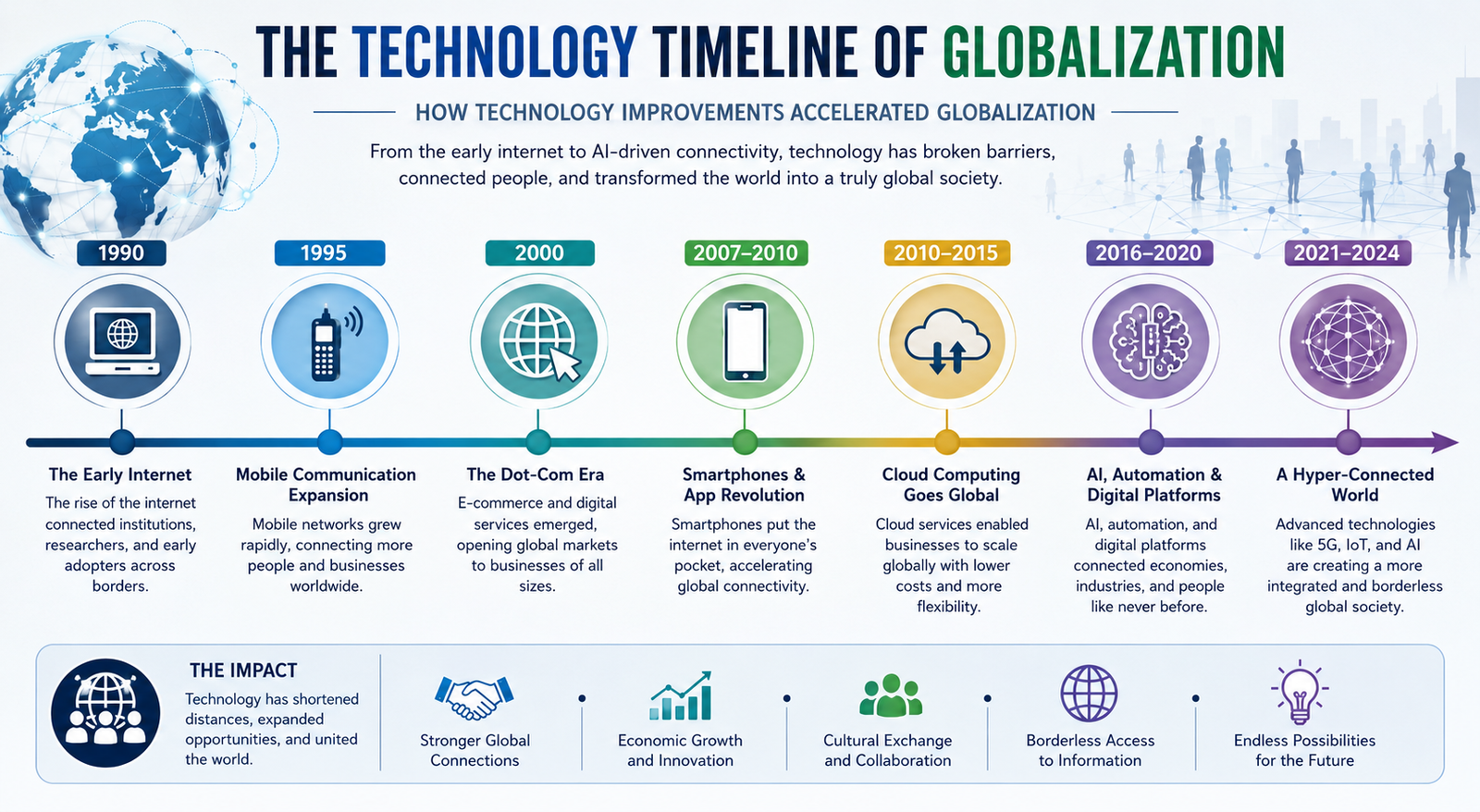
The world has never been more connected than it is today. What once took months of travel and correspondence now happens in milliseconds. This dramatic shift didn’t occur by chance—recent improvements in technology have fundamentally increased the pace of globalization, transforming how we communicate, trade, work, and interact across borders.
From the invention of the internet to the rise of artificial intelligence, technological advancements have systematically dismantled barriers that once limited international exchange. Today, a small business in rural India can sell products to customers in New York, a student in Kenya can attend classes at a European university remotely, and multinational teams collaborate seamlessly across continents.
This comprehensive guide explores the specific technological improvements that have accelerated globalization, examines their impact on economies and societies, and looks ahead to what the future holds for our increasingly interconnected world.
Understanding Globalization and Technology’s Role
What Is Globalization?
Globalization refers to the process by which businesses, cultures, economies, and populations become increasingly interconnected and interdependent across international boundaries. It encompasses the movement of goods, services, capital, information, and people around the world.
Historically, globalization occurred through exploration, colonization, and trade routes. However, the pace was slow, limited by physical and communication barriers. The modern era of globalization—often called “hyper-globalization”—is characterized by unprecedented speed and scale, driven almost entirely by technological innovation.
The Technology-Globalization Relationship
Technology and globalization share a symbiotic relationship. Technology enables globalization by:
- Reducing communication costs to near zero
- Accelerating information transfer from weeks to seconds
- Enabling remote collaboration across time zones
- Streamlining international logistics and supply chains
- Breaking down language barriers through translation tools
- Democratizing access to global markets and information
Conversely, globalization drives technological innovation by creating larger markets, fostering competition, and enabling knowledge sharing across borders. This feedback loop has created exponential acceleration in both domains over the past three decades.
Key Technological Improvements Driving Globalization
1. Internet and Digital Communication
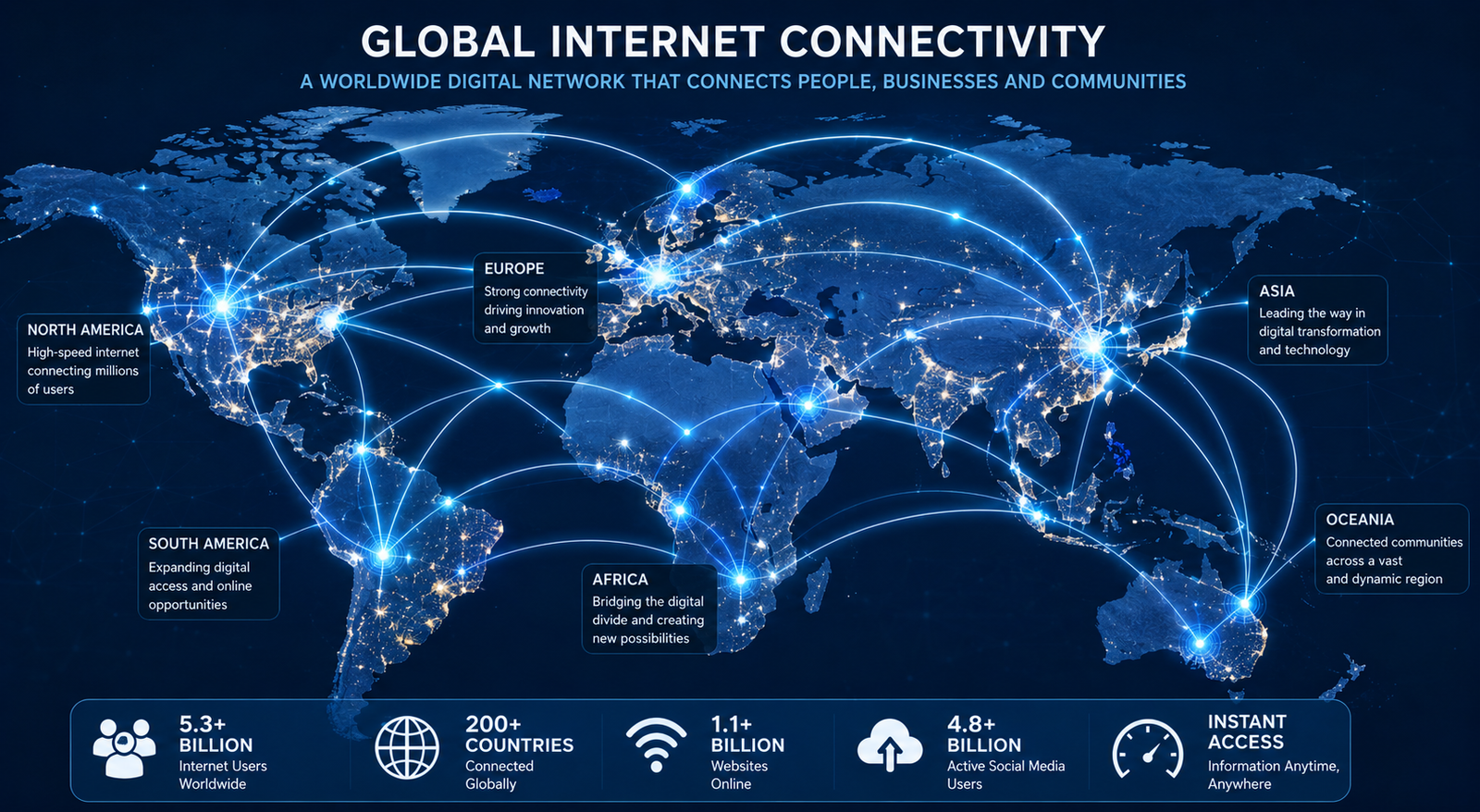
The internet stands as the single most transformative technology for globalization. Since its commercialization in the 1990s, internet penetration has grown from less than 1% to over 60% of the global population, creating a digital infrastructure that enables instant worldwide communication.
Key developments:
- Broadband expansion (1990s-2000s): High-speed internet enabled rich media sharing
- Fiber optic networks (2000s-present): Undersea cables connected continents with massive bandwidth
- 4G/5G mobile networks (2010s-present): Wireless internet reached remote areas
- Satellite internet (2020s): Projects like Starlink promise global coverage
This infrastructure transformed business operations, education, entertainment, and social interaction on a global scale.
2. Advanced Transportation Systems
While digital technology gets most attention, physical transportation improvements remain crucial for global trade.
Innovations include:
- Containerization: Standardized shipping containers revolutionized cargo transport
- GPS navigation: Precise routing reduced transit times and costs
- Automated port systems: Faster loading/unloading increased efficiency
- Advanced aircraft: Larger, more fuel-efficient planes lowered shipping costs
- High-speed rail: Faster overland connections in regional trade corridors
These improvements reduced shipping costs by up to 90% since the 1980s, making international trade economically viable for far more products.
3. Mobile Technology and Smartphones
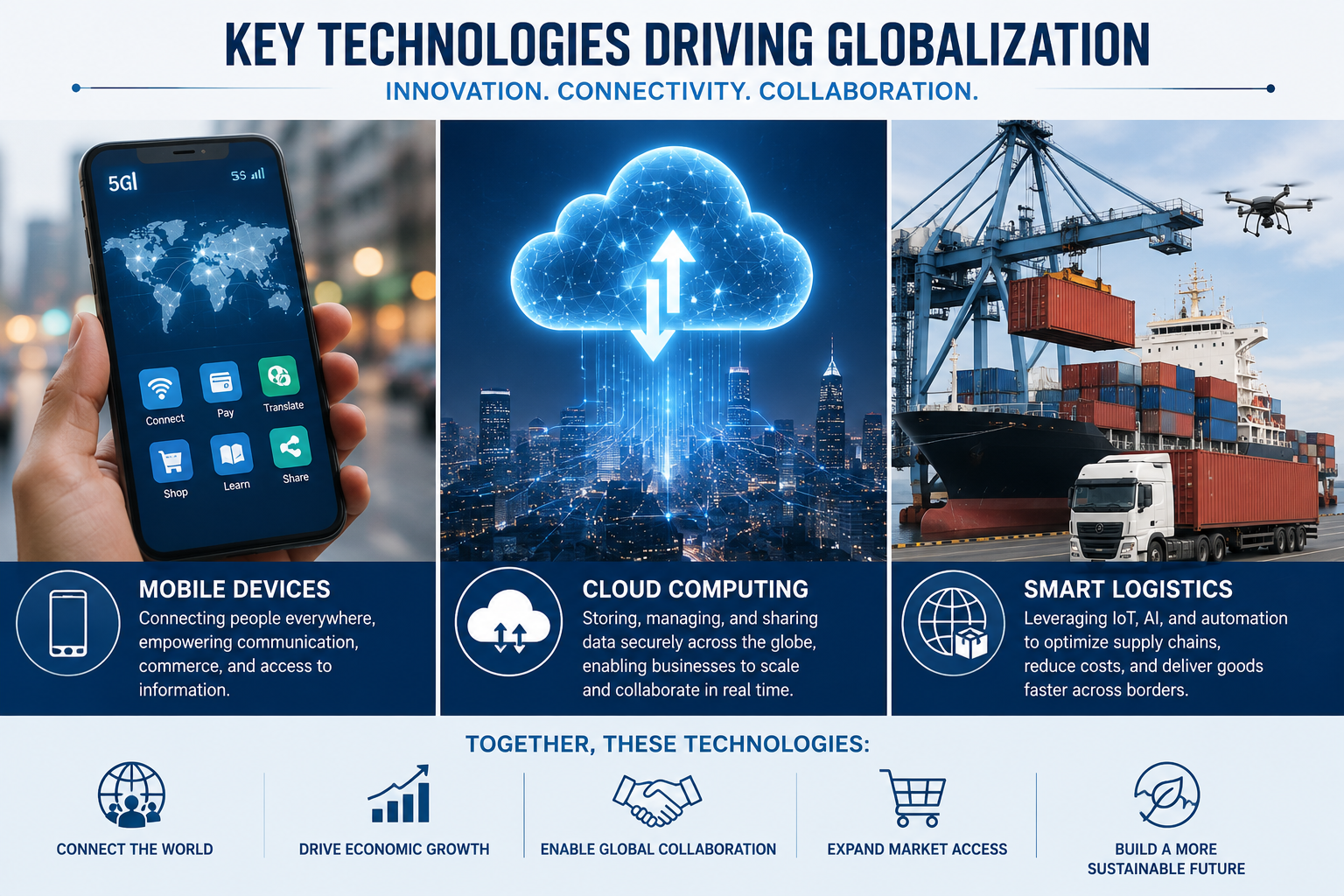
The smartphone revolution (2007-present) brought the internet and global connectivity to billions in developing nations who never owned computers.
Impact areas:
- Mobile-first internet access in Africa, Asia, and Latin America
- Mobile payment systems enabling financial inclusion
- Social media connectivity breaking down cultural barriers
- Location-based services facilitating international travel and commerce
- Instant translation apps reducing language barriers
By 2024, over 6.8 billion people own smartphones—nearly 85% of the global population.
4. Cloud Computing and Data Storage
Cloud technology eliminated geographic constraints on data storage and computing power.
Key contributions:
- Borderless data access: Information stored anywhere, accessible everywhere
- Scalable infrastructure: Small businesses can access enterprise-level resources
- Collaborative platforms: Teams work together regardless of location
- Reduced capital requirements: No need for local server infrastructure
- Disaster recovery: Data redundancy across global data centers
Companies like Amazon Web Services, Microsoft Azure, and Google Cloud created the backbone for global digital business operations.
5. Artificial Intelligence and Automation
AI technologies have removed some of the last barriers to seamless global interaction.
Applications:
- Real-time language translation: Breaking down communication barriers
- Automated customer service: 24/7 support across time zones
- Predictive analytics: Optimizing global supply chains
- Personalization engines: Adapting content for diverse global audiences
- Quality control: Maintaining standards across international production
AI enables businesses to operate globally with efficiency previously requiring massive human resources.
How the Internet Revolutionized Global Connectivity
E-commerce and Cross-Border Trade
The internet created the first truly global marketplace accessible to anyone with a connection.
Before the internet:
- International trade required physical presence or expensive intermediaries
- Small businesses rarely engaged in cross-border commerce
- Consumer choice was limited to local and national options
- Price discovery was inefficient and information-asymmetric
After the internet:
- Platforms like Amazon, eBay, and Alibaba connect buyers and sellers worldwide
- Small businesses can reach international customers directly
- Consumers compare prices and products globally
- Digital products (software, media, services) trade freely across borders
Global e-commerce sales exceeded $5.7 trillion in 2022, with cross-border transactions growing 25% annually—far outpacing traditional retail.
Real-Time Communication Across Continents
Email, instant messaging, video conferencing, and social media collapsed communication timelines.
Communication evolution:
- 1980s: International calls cost $3-5 per minute
- 1990s: Email enabled asynchronous communication at negligible cost
- 2000s: VoIP services (Skype) made voice calls essentially free
- 2010s: Video conferencing (Zoom, Teams) normalized face-to-face remote meetings
- 2020s: Virtual reality promises immersive global presence
The COVID-19 pandemic accelerated adoption, with daily Zoom meeting participants jumping from 10 million (2019) to 300 million (2020), demonstrating technology’s ability to maintain global operations despite physical barriers.
Remote Work and Digital Nomadism
Internet connectivity decoupled work from physical location, creating new forms of global labor participation.
Key trends:
- Remote-first companies: Organizations with employees across dozens of countries
- Freelance marketplaces: Platforms like Upwork and Fiverr connecting global talent with global demand
- Digital nomads: Professionals working while traveling internationally
- Outsourcing evolution: From call centers to high-skilled knowledge work
- Asynchronous collaboration: Teams working productively across time zones
An estimated 35% of jobs in developed economies can be performed remotely, enabling unprecedented global labor market integration.
Transportation Technology and Global Supply Chains
Containerization and Shipping Innovation
The standardized shipping container (introduced in the 1950s but perfected with modern technology) fundamentally changed international trade economics.
Technological enhancements:
- IoT-enabled tracking: Real-time location and condition monitoring
- Automated loading systems: Faster port operations
- Refrigerated containers: Expanded perishable goods trade
- Mega-ships: Economies of scale reducing per-unit costs
- Blockchain logistics: Transparent, secure documentation
Shipping costs dropped so dramatically that it became cheaper to manufacture goods overseas and ship them globally than to produce locally—reshaping the entire global manufacturing landscape.
Air Freight Advancements
Air cargo technology improvements enabled rapid global movement of high-value and time-sensitive goods.
Key developments:
- Dedicated cargo aircraft: Optimized for freight rather than passengers
- Hub-and-spoke systems: Efficient routing through strategic locations
- Cold chain logistics: Temperature-controlled transport for pharmaceuticals and biologics
- Express services: Overnight delivery across continents
- Autonomous cargo planes (emerging): Future cost reductions
Companies like FedEx and DHL created global networks that can deliver packages anywhere within 24-48 hours.
GPS and Logistics Optimization
GPS technology (fully operational since 1995) revolutionized transportation efficiency.
Applications:
- Route optimization: Dynamic rerouting based on traffic, weather, and conditions
- Fleet management: Real-time tracking of global vehicle fleets
- Delivery precision: Exact location delivery in unfamiliar countries
- Supply chain visibility: End-to-end tracking of goods movement
- Just-in-time manufacturing: Reduced inventory costs through precise timing
These improvements reduced logistics costs by an estimated 30-40% while improving reliability and speed.
Mobile Technology’s Impact on Developing Nations
Financial Inclusion Through Mobile Banking
Mobile technology enabled financial services to reach the “unbanked” populations in developing countries.
Transformative examples:
- M-Pesa (Kenya): Mobile money platform serving 51 million users
- Paytm (India): Digital wallet with over 350 million users
- WeChat Pay (China): Integrated super-app with financial services
- Cryptocurrency wallets: Borderless financial access via smartphones
These services integrated previously isolated populations into the global financial system, enabling them to participate in international commerce, receive remittances, and access credit.
Access to Education and Information
Smartphones brought educational resources to regions without traditional infrastructure.
Impact areas:
- Online courses: Platforms like Coursera, Khan Academy reaching rural learners
- Digital libraries: Free access to global knowledge repositories
- Language learning: Apps connecting learners with native speakers worldwide
- Agricultural information: Farmers accessing weather, pricing, and best practices
- Health information: Telemedicine and health apps in underserved areas
This democratization of information accelerated knowledge transfer from developed to developing regions.
Bridging the Digital Divide
While challenges remain, mobile technology has been more effective than any previous infrastructure at bridging global inequality.
Progress indicators:
- Mobile penetration in developing countries reached 85% (vs. 57% for desktop internet)
- Cost reduction: Smartphone prices dropped to under $50 for basic models
- Local language content: Apps and services available in hundreds of languages
- Offline functionality: Apps that work with intermittent connectivity
- Community access: Shared devices and internet cafes extending reach
This inclusion brought billions into the global digital economy as both consumers and producers.
Cloud Computing: The Backbone of Modern Globalization
Borderless Data Storage
Cloud technology eliminated physical location as a factor in data management.
Key advantages:
- Geographic redundancy: Data replicated across multiple continents
- Regulatory compliance: Data stored in jurisdictions meeting local laws
- Instant global access: Employees, partners, and customers access data anywhere
- Disaster recovery: Natural disasters or outages don’t compromise data
- Scalability: Storage expands seamlessly with business growth
Companies no longer need physical presence in markets to serve customers there effectively.
Collaborative Work Platforms
Cloud-based tools enabled true real-time collaboration across distances.
Essential platforms:
- Google Workspace: Documents, sheets, and presentations with simultaneous editing
- Microsoft 365: Cloud-based Office suite with Teams integration
- Slack: Asynchronous communication across time zones
- Trello/Asana: Project management for distributed teams
- Miro/Figma: Visual collaboration and design tools
These platforms created “virtual offices” where geographic location became irrelevant to productive collaboration.
Scalability for Global Businesses
Cloud infrastructure democratized access to enterprise-grade technology.
Benefits for small/medium businesses:
- No capital investment: Pay-as-you-go eliminates upfront costs
- Instant global presence: Deploy applications worldwide in minutes
- Enterprise features: Access to AI, analytics, and security tools
- Automatic updates: Always using latest versions
- Focus on core business: Infrastructure managed by specialists
A startup can now launch with global reach from day one—something previously requiring massive investment and years of expansion.
AI and Automation in Global Markets
Language Translation Technologies
AI-powered translation broke down one of globalization’s most persistent barriers.
Evolution:
- Rule-based translation (1990s-2000s): Limited accuracy
- Statistical machine translation (2000s): Improved but still rough
- Neural machine translation (2016-present): Near-human quality for common languages
- Real-time voice translation (2020s): Instant spoken language conversion
- Context-aware translation: Understanding nuance and cultural references
Services like Google Translate, DeepL, and integrated translation in platforms enable communication across language barriers with unprecedented ease.
Automated International Customer Service
AI chatbots and virtual assistants provide 24/7 customer support across time zones and languages.
Capabilities:
- Multi-language support: Instant switching between languages
- 24/7 availability: No human staffing constraints
- Consistent quality: Same service level regardless of volume
- Scalability: Handle millions of interactions simultaneously
- Learning systems: Continuous improvement from interactions
This technology enables small businesses to provide global customer service previously requiring large call center operations.
Predictive Analytics for Global Trade
AI analyzes massive datasets to optimize international business operations.
Applications:
- Demand forecasting: Predicting product demand across markets
- Supply chain optimization: Identifying bottlenecks and efficiencies
- Risk assessment: Evaluating political, economic, and logistical risks
- Dynamic pricing: Adjusting prices based on local conditions
- Market identification: Finding opportunities in emerging markets
These capabilities allow businesses to navigate global complexity with greater confidence and precision.
The Pace of Globalization: Before vs. After Technology
Historical Timeline Comparison
Pre-Internet Era (Before 1990s):
- Communication: Letters took weeks; phone calls cost dollars per minute
- Trade: Required physical presence or expensive intermediaries
- Information: Limited to local sources and expensive specialized research
- Collaboration: Required in-person meetings or slow postal exchange
- Market entry: Years of investment to establish international presence
- Cultural exchange: Limited to travelers, expatriates, and mass media
Early Internet Era (1990s-2000s):
- Communication: Email and early messaging platforms
- Trade: First e-commerce platforms emerging
- Information: Search engines providing global information access
- Collaboration: File sharing and basic online tools
- Market entry: Months to establish basic online international presence
- Cultural exchange: Forums, early social media, and websites
Modern Era (2010s-Present):
- Communication: Instant messaging, video calls, social media—all free
- Trade: Global marketplaces accessible to anyone
- Information: Massive repositories, AI-curated, instantly accessible
- Collaboration: Real-time document editing, virtual offices, remote teams
- Market entry: Days or hours to launch global digital business
- Cultural exchange: Constant cross-cultural interaction through multiple platforms
Measurable Metrics of Acceleration
The technology-driven acceleration of globalization shows clearly in quantitative measures:
International Trade:
- 1990: $3.5 trillion in global merchandise exports
- 2023: $25 trillion in global merchandise exports
- 7x increase in 33 years
Cross-Border Data Flows:
- 2005: ~5 terabits per second
- 2023: ~600 terabits per second
- 120x increase in 18 years
International Travel:
- 1990: 435 million international tourist arrivals
- 2019: 1.5 billion international tourist arrivals
- 3.4x increase in 29 years
Foreign Direct Investment:
- 1990: $207 billion
- 2022: $1.3 trillion
- 6.3x increase
Internet Users:
- 1995: 16 million (0.4% of global population)
- 2023: 5.3 billion (66% of global population)
- 331x increase in absolute numbers
Cross-Border E-commerce:
- 2015: $189 billion
- 2023: $785 billion
- 4.2x increase in just 8 years
These metrics demonstrate that globalization hasn’t just continued—it has accelerated exponentially with each wave of technological innovation.
Real-World Examples of Technology-Driven Globalization
Case Study: Amazon’s Global Marketplace
Amazon exemplifies how technology enables global commerce at unprecedented scale.
Technological foundation:
- Cloud infrastructure (AWS): Reliable platform serving global customers
- AI recommendations: Personalized shopping experiences across countries
- Logistics network: Sophisticated routing and fulfillment algorithms
- Translation services: Marketplace available in dozens of languages
- Payment processing: Accepting currencies and payment methods worldwide
- Seller platform: Enabling merchants from 100+ countries to reach global customers
Impact:
- Over 300 million active customers worldwide
- Marketplace sellers from 130+ countries
- Products shipped to 100+ countries
- Small businesses in developing countries accessing wealthy markets
- Same-day or next-day delivery across continents in some regions
A single platform connects producers and consumers globally in ways that would have required massive multinational corporate infrastructure just decades ago.
Case Study: Zoom and Remote Global Collaboration
Zoom’s explosive growth during the pandemic illustrated technology’s power to maintain global connectivity despite physical barriers.
Technological capabilities:
- High-quality video compression: Reliable calls on variable internet connections
- Global data center network: Low-latency connections worldwide
- Cloud architecture: Scaling from millions to billions of meeting minutes
- Screen sharing and collaboration: Replicating in-person meeting features
- Recording and transcription: AI-powered meeting documentation
- Translation integration: Real-time captions in multiple languages
Impact:
- Enabled business continuity during COVID-19 lockdowns
- Facilitated international education with school closures
- Created “virtual presence” across borders
- Normalized remote work for global teams
- Reduced business travel carbon footprint while maintaining connections
Zoom demonstrated that physical presence is no longer necessary for effective global collaboration.
Case Study: Chinese Manufacturing and IoT
China’s integration into global supply chains illustrates how technology enables complex international production networks.
Technological enablers:
- IoT sensors: Real-time monitoring of production quality and output
- Supply chain software: Coordinating components from dozens of countries
- Communication platforms: Instant coordination with global clients
- Payment systems: Efficient international transactions
- Logistics tracking: End-to-end visibility of shipments
- Quality control systems: Remote inspection and verification
Impact:
- “World’s factory” producing goods for global markets
- Small manufacturers accessible to international buyers via platforms like Alibaba
- Just-in-time manufacturing with global component sourcing
- Rapid prototyping and production for businesses worldwide
- Integration of Chinese suppliers into Western company supply chains
This integration created unprecedented economic interdependence and lifted hundreds of millions from poverty while providing affordable goods globally.
Challenges and Concerns
Digital Divide and Inequality
While technology has connected billions, significant disparities remain.
Persistent gaps:
- Infrastructure access: Rural and remote areas still lack reliable connectivity
- Cost barriers: Internet and devices remain unaffordable for poorest populations
- Digital literacy: Lack of skills to utilize technology effectively
- Content gaps: Limited local-language content in some regions
- Quality differences: Slow connections limiting functionality in developing areas
These divides can actually exacerbate global inequality when some populations benefit from globalization while others are excluded.
Mitigation efforts:
- Government broadband expansion programs
- Low-cost device initiatives
- Community internet access points
- Digital literacy education programs
- Local content creation incentives
Cultural Homogenization
Rapid global cultural exchange raises concerns about loss of local identity.
Concerns:
- Dominant culture spread: Western (particularly American) cultural products dominating globally
- Language erosion: English becoming global lingua franca at expense of local languages
- Traditional practices: Modern global culture replacing traditional customs
- Local businesses: Global platforms displacing local alternatives
- Algorithmic bias: AI systems reflecting dominant culture perspectives
Countertrends:
- Rise of local content on global platforms (K-pop, Bollywood, etc.)
- Technology enabling preservation of endangered languages and cultures
- Local platforms serving regional markets (WeChat, VK, etc.)
- Increased global appreciation for cultural diversity
- Remix culture creating new hybrid forms
The reality appears more nuanced than simple homogenization, with technology enabling both cultural spread and preservation.
Privacy and Data Security
Global data flows create new vulnerabilities and governance challenges.
Challenges:
- Cross-border data transfers: Varying privacy regulations across jurisdictions
- Surveillance concerns: Government access to international communications
- Data breaches: Customer information vulnerable across multiple countries
- Regulatory compliance: Navigating different privacy laws (GDPR, CCPA, etc.)
- Corporate data collection: Global platforms gathering unprecedented information
Developing solutions:
- International data protection frameworks
- End-to-end encryption technologies
- Data localization requirements
- Privacy-enhancing technologies
- Greater user control and transparency
These challenges require ongoing technological and policy innovation to balance connectivity with security and rights.
The Future of Technology and Globalization
5G Networks and Hyper-Connectivity
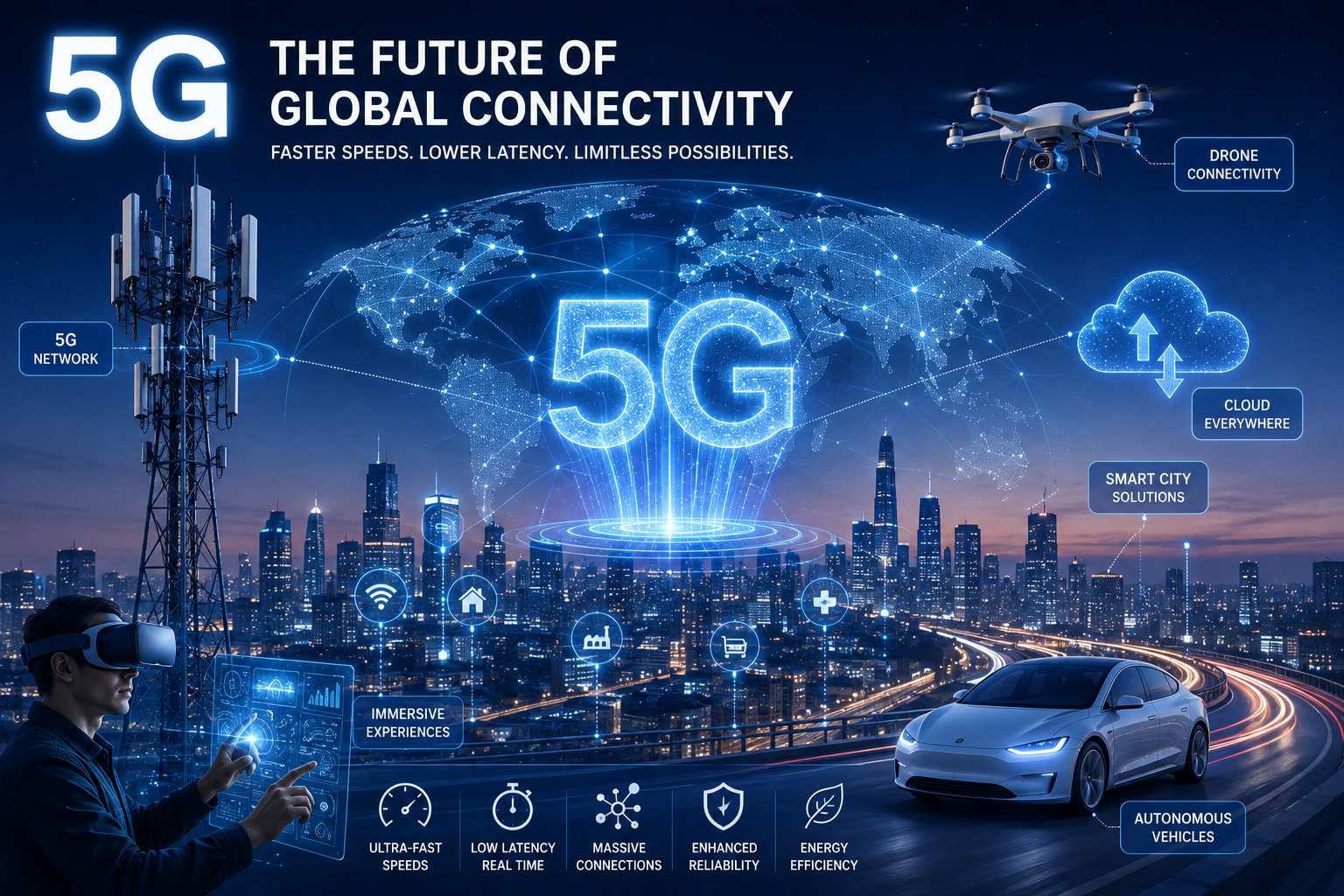
Fifth-generation wireless networks promise to further accelerate globalization.
Capabilities:
- 100x faster speeds: Enabling new applications like remote surgery, autonomous vehicles
- Ultra-low latency: Real-time interaction across distances
- Massive device connectivity: Internet of Things at unprecedented scale
- Network slicing: Dedicated virtual networks for specific applications
- Edge computing: Processing closer to users for faster response
Globalization impacts:
- Further closing rural-urban digital divides
- Enabling sophisticated remote work in more fields
- Supporting smart city initiatives worldwide
- Facilitating augmented and virtual reality collaboration
- Connecting billions more devices globally
Global 5G deployment accelerates connectivity to a new level of integration.
Blockchain and Decentralized Systems
Blockchain technology promises to reshape global trust and transaction systems.
Applications:
- Cryptocurrency: Borderless currency without national control
- Smart contracts: Self-executing agreements across jurisdictions
- Supply chain verification: Transparent tracking from origin to consumer
- Digital identity: Portable identity across borders and platforms
- Decentralized finance (DeFi): Financial services without traditional intermediaries
Potential impacts:
- Reducing transaction costs for international transfers
- Enabling trust in transactions without shared legal systems
- Providing financial services to unbanked populations
- Creating truly global, decentralized organizations
- Challenging traditional notions of sovereignty and regulation
While still emerging, blockchain could represent the next major technological shift in globalization.
Quantum Computing Possibilities
Quantum computers, while still in early development, could revolutionize global connectivity.
Future applications:
- Unbreakable encryption: Secure global communications
- Complex optimization: Solving global logistics and resource allocation problems
- Drug discovery: Accelerating global pharmaceutical development
- Climate modeling: Better understanding of global environmental systems
- Financial modeling: More sophisticated global economic analysis
Globalization implications:
- Solving currently intractable global coordination problems
- Enabling new forms of international collaboration
- Creating new technological divides between nations with access
- Potentially disrupting current encryption-based security systems
- Accelerating scientific and technological advancement
The quantum era represents both promise and uncertainty for global integration.
Frequently Asked Questions
Q: How has technology specifically increased the speed of globalization?
Technology has increased globalization speed by reducing communication time from weeks to seconds, lowering transaction costs by up to 90%, enabling real-time collaboration across continents, creating global marketplaces accessible instantly, and providing information access that previously required specialized research. These improvements compress timelines that once took years into days or hours.
Q: What is the most important technology driving globalization today?
While many technologies contribute, the internet remains the most fundamental driver. It serves as the infrastructure enabling virtually all other globalization technologies—from e-commerce platforms to cloud computing to mobile apps. Without internet connectivity, modern globalization would be impossible.
Q: How has mobile technology specifically impacted developing countries’ participation in globalization?
Mobile technology has been transformative for developing countries by providing internet access without expensive computer and broadband infrastructure, enabling mobile banking for populations without traditional banks, connecting farmers and small businesses to global markets, providing educational resources in remote areas, and bringing billions into the global digital economy as both consumers and producers.
Q: What are the negative effects of technology-driven globalization?
Negative effects include widening digital divides that exclude populations without access, potential cultural homogenization threatening local identities, job displacement in some industries due to automation and offshoring, privacy and security concerns from global data flows, increased vulnerability to global economic shocks due to interdependence, and environmental impacts from increased consumption and transportation.
Q: How has cloud computing changed international business?
Cloud computing eliminated the need for expensive local infrastructure in each market, enabled small businesses to access enterprise-grade technology, allowed companies to launch global services in days rather than months, provided data redundancy and disaster recovery across continents, facilitated remote work through collaborative platforms, and reduced capital requirements for international expansion.
FAQS
Q: Will artificial intelligence accelerate globalization further?
Yes, AI will likely accelerate globalization through improved real-time translation breaking down language barriers, automated customer service enabling 24/7 global support, predictive analytics optimizing complex global supply chains, personalization allowing businesses to serve diverse global markets effectively, and automation reducing labor cost advantages of offshoring. However, AI could also enable “reshoring” of some manufacturing.
Q: How has technology affected the pace of cultural exchange globally?
Technology has dramatically accelerated cultural exchange through social media connecting people across cultures instantly, streaming platforms distributing entertainment globally, translation tools enabling cross-language communication, collaborative platforms facilitating international creative projects, and travel booking technology making physical cultural exchange easier. This has created both greater cultural awareness and concerns about homogenization.
Q: What future technologies might further increase globalization?
Future globalization drivers include 5G networks enabling new real-time applications, quantum computing solving complex global optimization problems, advanced AI providing seamless cross-cultural communication, blockchain creating trustless global transaction systems, virtual and augmented reality enabling immersive remote presence, autonomous vehicles and drones transforming logistics, and potentially space-based infrastructure providing global connectivity.
Conclusion
The evidence is overwhelming: recent improvements in technology have fundamentally increased the pace of globalization, transforming our world into an interconnected system that would have seemed impossible just decades ago. From the internet revolution to mobile technology, from cloud computing to artificial intelligence, each wave of innovation has systematically removed barriers that once limited international exchange.
These technological improvements have created measurable acceleration across every dimension of globalization—trade volumes, data flows, international travel, cultural exchange, and economic integration have all grown exponentially. What once took months now takes seconds; what required massive capital investment can now be achieved from a laptop; what demanded physical presence can now happen virtually.
Yet this acceleration brings both tremendous opportunities and significant challenges. While billions have been connected to the global economy, digital divides persist. While knowledge flows freely across borders, concerns about privacy and security grow. Whle cultures exchange and blend, questions arise about preservation of local identities.
Looking forward, emerging technologies promise to further accelerate this process. 5G networks, blockchain, quantum computing, and advanced AI will likely drive another leap in global integration. The organizations, communities, and individuals who understand and harness these technological forces will thrive in an increasingly connected world.
The pace of globalization shows no signs of slowing—if anything, technology continues to accelerate the process. Understanding how these improvements drive global connectivity isn’t just academic interest; it’s essential knowledge for anyone participating in our modern, interdependent world.