
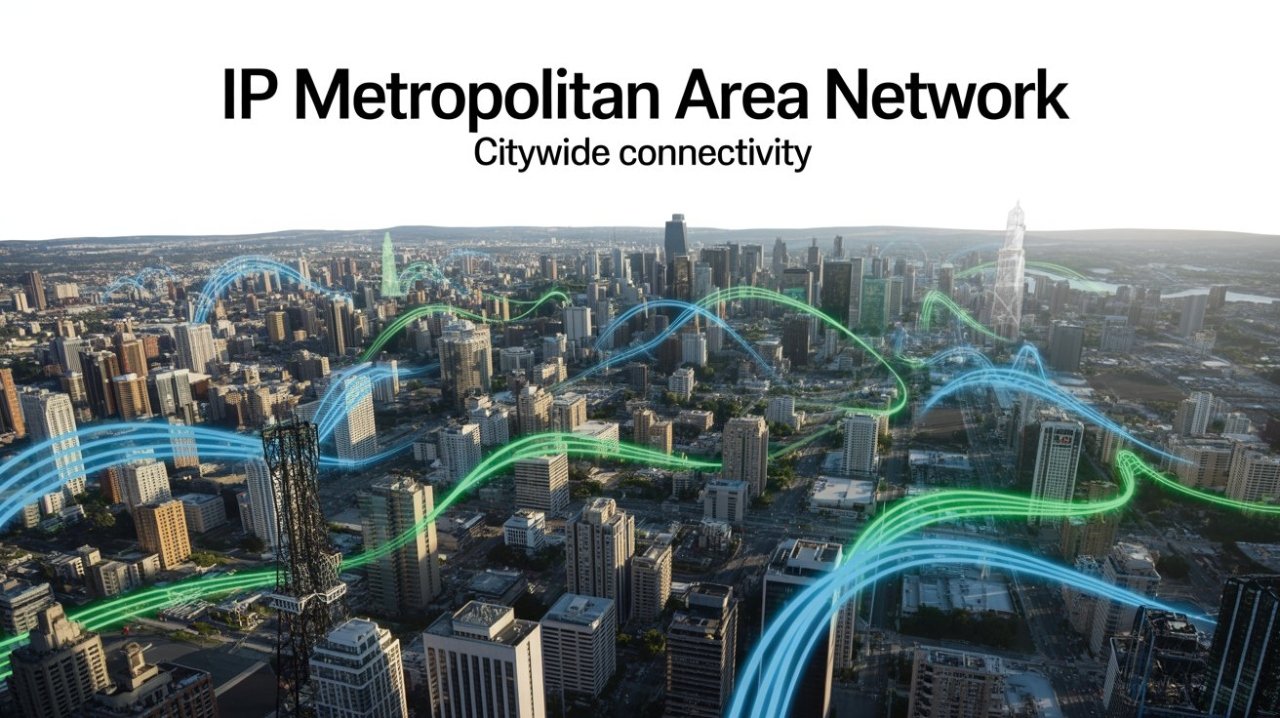
An ip metropolitan area network plays a key role in connecting people and systems across a city. In today’s digital world, fast and reliable communication is essential. Therefore, businesses, schools, hospitals, and governments rely on strong networks. Moreover, this type of network helps share data quickly and efficiently. Because of this, it has become a backbone of modern cities. In this article, you will learn what an ip metropolitan area network is, how it works, and why it matters. Additionally, you will explore its benefits, challenges, and future.
What Is an ip metropolitan area network?
An ip metropolitan area network is a large network that connects multiple local networks within a city. In simple terms, it acts like a bridge that links different buildings, offices, and campuses.
Unlike small networks used at home, this network covers a wide area. However, it is smaller than a global network. Because of this, it is perfect for city-level communication.
Moreover, it uses Internet Protocol to transfer data. This means information like voice, video, and files can be shared smoothly. As a result, organizations can communicate quickly and effectively.
A Brief History
The development of the ip metropolitan area network began as cities grew larger. At first, communication systems were limited to small areas. However, as demand increased, better solutions were needed.
Then, fiber optic technology improved network speed. Because of this, larger networks became possible. In addition, the use of Internet Protocol allowed flexible data transfer.
Over time, these networks expanded across cities. Today, they support many services, including internet access, video streaming, and business operations. Therefore, they have become an important part of urban infrastructure.
How an ip metropolitan area network Works
An ip metropolitan area network works by connecting multiple local networks through high-speed links. First, data is created at one location. Then, it is broken into small packets.
Next, these packets travel through routers and switches. Each device helps guide the data to its destination. Moreover, the network uses high-speed connections like fiber optics.
Finally, the data reaches its target and is reassembled. As a result, users receive information quickly and accurately. Because of this process, communication remains smooth and efficient.
Key Features
An ip metropolitan area network has several important features. First, it offers high speed. Data can travel quickly across long distances within a city.
Second, it is scalable. New users and locations can be added easily. Therefore, it grows with demand.
Third, it is reliable. Strong connections reduce downtime and ensure consistent performance.
In addition, it supports multiple services. Voice calls, video streaming, and data sharing all run on the same network.
Finally, it is cost-effective. Organizations can reduce expenses by using a shared network system.
Benefits of ip metropolitan area network
There are many benefits to using an ip metropolitan area network. First, it improves communication. Teams can connect in real time without delays.
Second, it increases productivity. Faster data transfer saves time and boosts efficiency.
Moreover, it reduces costs. Instead of building separate networks, organizations can share one system.
In addition, it supports innovation. New technologies like cloud computing work better with strong networks.
Furthermore, it enhances customer service. Businesses can respond quickly and provide better support. Therefore, it helps organizations grow and succeed.
Applications in Different Sectors
An ip metropolitan area network is used in many sectors. In education, schools and universities connect campuses. Students and teachers can share resources easily.
In healthcare, hospitals use it to share patient data. This improves diagnosis and treatment.
In business, companies connect offices across the city. This supports teamwork and communication.
In government, agencies use it to share information and manage services.
Additionally, entertainment industries rely on it for streaming and broadcasting. Therefore, it plays a role in many aspects of daily life.
Difference Between MAN, LAN, and WAN
Understanding the difference between network types is important. A local area network covers a small area, like a home or office.
A wide area network covers large regions, such as countries or continents.
However, an ip metropolitan area network sits in between. It covers a city or metropolitan area. Because of this, it balances speed and coverage.
Moreover, it provides better performance for city-level connections. Therefore, it is ideal for urban environments.
Challenges of ip metropolitan area network
Despite its advantages, an ip metropolitan area network faces challenges. First, setup costs can be high. Building infrastructure requires investment.
Second, managing the network can be complex. Skilled professionals are needed to handle operations.
In addition, security risks exist. Data must be protected from threats.
Furthermore, maintenance is required. Equipment must be updated and repaired regularly.
However, these challenges can be managed with proper planning. Therefore, organizations continue to adopt this technology.
Security in ip metropolitan area network
Security is a major concern for any network. In an ip metropolitan area network, strong measures are used to protect data.
For example, firewalls block unauthorized access. Encryption keeps information safe during transmission.
In addition, regular updates improve security. Monitoring systems detect unusual activity.
Moreover, access controls ensure that only authorized users can connect. Therefore, security plays a key role in maintaining trust.
Role of Technology
Technology drives the growth of the ip metropolitan area network. Fiber optics provide high-speed connections.
Wireless technologies add flexibility. Devices can connect without cables.
Cloud computing supports data storage and access. Users can retrieve information from anywhere.
In addition, automation improves network management. Tasks are handled efficiently with minimal effort.
Therefore, advanced technology makes these networks more powerful and reliable.
Future of ip metropolitan area network
The future of the ip metropolitan area network looks bright. As cities become smarter, demand for strong networks will increase.
Moreover, technologies like 5G will improve speed and connectivity. This will support new applications such as smart transportation.
In addition, the Internet of Things will connect more devices. Homes, vehicles, and systems will communicate seamlessly.
Furthermore, sustainability will become important. Energy-efficient networks will be developed.
Therefore, this network will continue to evolve and support modern life.
Why ip metropolitan area network Matters
An ip metropolitan area network matters because it connects communities. It supports communication, business, and public services.
Moreover, it helps cities grow and develop. Strong networks attract investment and innovation.
In addition, it improves quality of life. People can access services quickly and easily.
Furthermore, it supports emergency response. Quick communication can save lives.
Therefore, it is an essential part of modern infrastructure.
Conclusion
An ip metropolitan area network is a powerful tool for citywide communication. It connects people, systems, and organizations efficiently.
Moreover, it offers many benefits, including speed, reliability, and cost savings. Although challenges exist, solutions continue to improve the system.
In conclusion, this network plays a key role in modern society. As technology advances, its importance will only grow. Therefore, it will remain a vital part of connected cities.